Why the Fitzpatrick Scale Is No Longer The Standard
The Fitzpatrick scale has long been used as a reference point in esthetics and the beauty industry. It gave multiple industries a shared language around sun response, how skin burns or tans under UV exposure. For that purpose, it was useful.
But modern skin care asks more of us.
Somewhere along the way, the Fitzpatrick scale began standing in for things it was never designed to measure: pigment behavior, treatment safety, healing outcomes, and risk. Not because it’s wrong, but because it’s incomplete.
Skin is not a color category. It’s a biological system.

Models: (L-R) Vincint (@vincint), Christin Brown (@curlfactor), Joy McElveen (@joy.mcelveen), Brandi J. Andrews(@brandijandrews), Germaine Nichols(@germainenichols), Carissa Rae Martin (@carissaraemartin), and Kay Wheeler (@kaywheeeler).
Photo Credit: Justis Randall
Sun Response Isn’t Skin Behavior
The Fitzpatrick scale tells us how skin reacts to sunlight. What it doesn’t tell us is how melanin behaves under inflammation, hormonal shifts, stress, or trauma.
Pigmentation disorders like PIH and melasma are influenced by barrier integrity, inflammatory pathways, melanocyte reactivity, cortisol levels, and hormonal signaling. Two people with the same Fitzpatrick type can have completely different treatment outcomes: one heals completely, the other hyperpigments for weeks or months.
That difference isn’t about shade. It’s about biology.
Barrier Health Predicts Risk. Not Skin Tone
In practice, the most reliable indicator of treatment safety isn’t color, it’s barrier health.
I see clients across the melanin spectrum respond beautifully to advanced treatments when their barriers and internal systems are supported, and I see lighter skin struggle when inflammation and dysfunction are ignored. Barrier integrity, not Fitzpatrick type, often determines whether skin recovers or reacts.
This is one of the scale’s biggest limitations. It was never built to assess barrier health—yet barrier health governs outcomes.
Melanin Isn’t Superficial Or Surface Level
Emerging research and clinical observation continue to confirm that melanin signaling extends beyond the surface. Melanin activity interacts across layers of the skin and responds to inflammation, vascular changes, immune signaling, and wound-healing processes.
Every layer matters. Treating melanin as a surface issue oversimplifies something far more dynamic.

Model: Germain Nichols (@germainenichols)
Photo Credit: Justis Randall
Skin Reflects Internal Systems
Skin doesn’t exist in isolation. Pigment irregularities often mirror internal imbalance: gut health, liver function, hormonal load, and systemic inflammation all play a role. When internal systems are overwhelmed, skin becomes the communicator.
A scale based solely on appearance can’t capture that conversation.
A More Complete Way Forward
This isn’t about discarding the Fitzpatrick scale. It still serves a purpose. However, in esthetics and the beauty industry, we require a wider lens. One that accounts for barrier health, inflammatory load, pigment reactivity, hormonal context, and nervous system state.
The Fitzpatrick scale helped us understand sun response. Youth Dealer’s internal systems-based approach helps us understand skin AND the person.
And understanding skin fully, respectfully, and safely, is where the future of these industries lives.
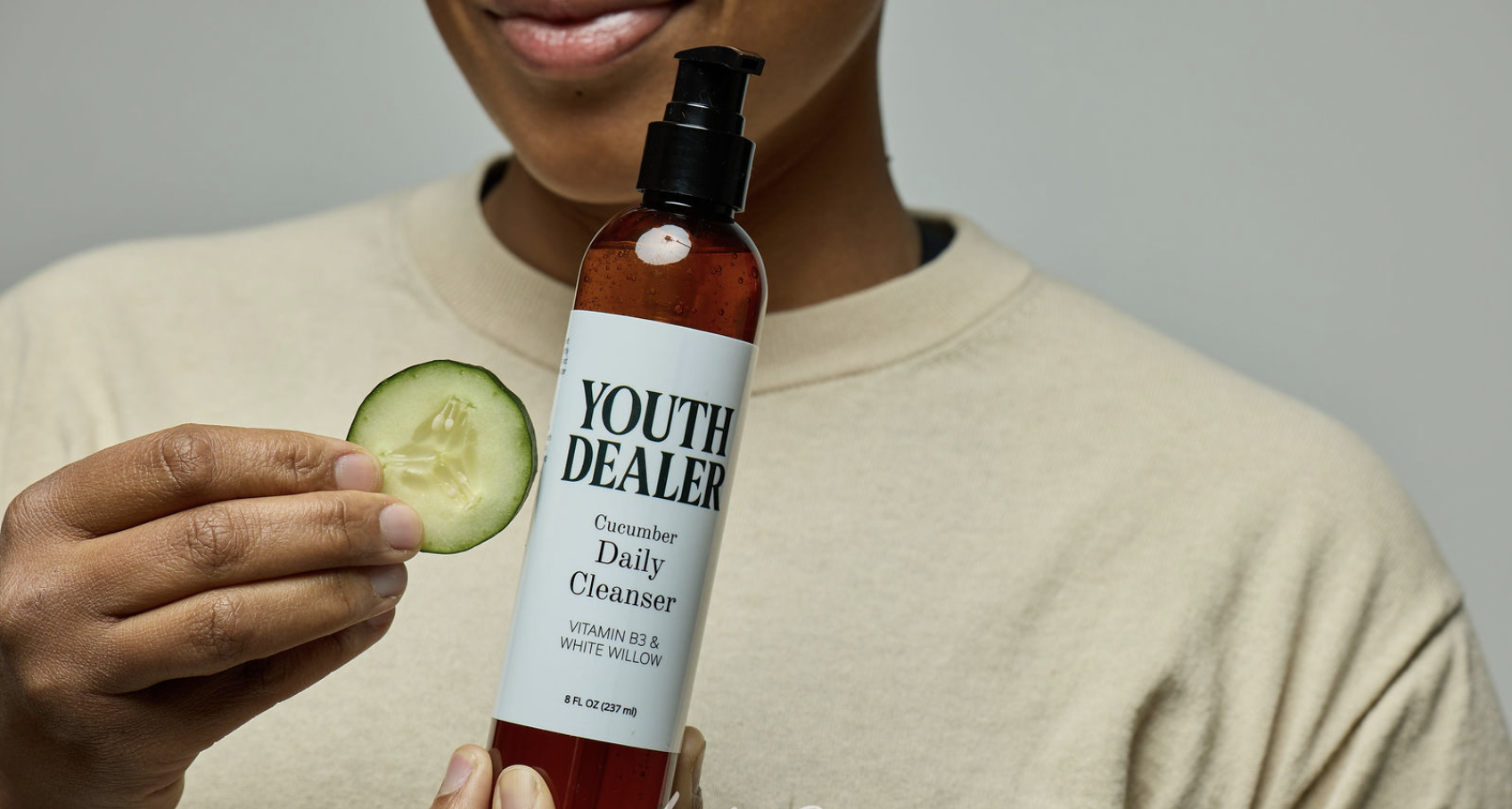
Model: Christin Brown (@curlfactor)
Photo Credit: Justis Randall